
Bedtime routines · Ages 0–18 years
How Much Sleep Do Kids Need by Age? A Parent’s Guide
Find recommended sleep hours by age, including naps, plus an example of counting sleep and optional notes to discuss with your child’s clinician.
Published 2 July 2026 · 3 min read
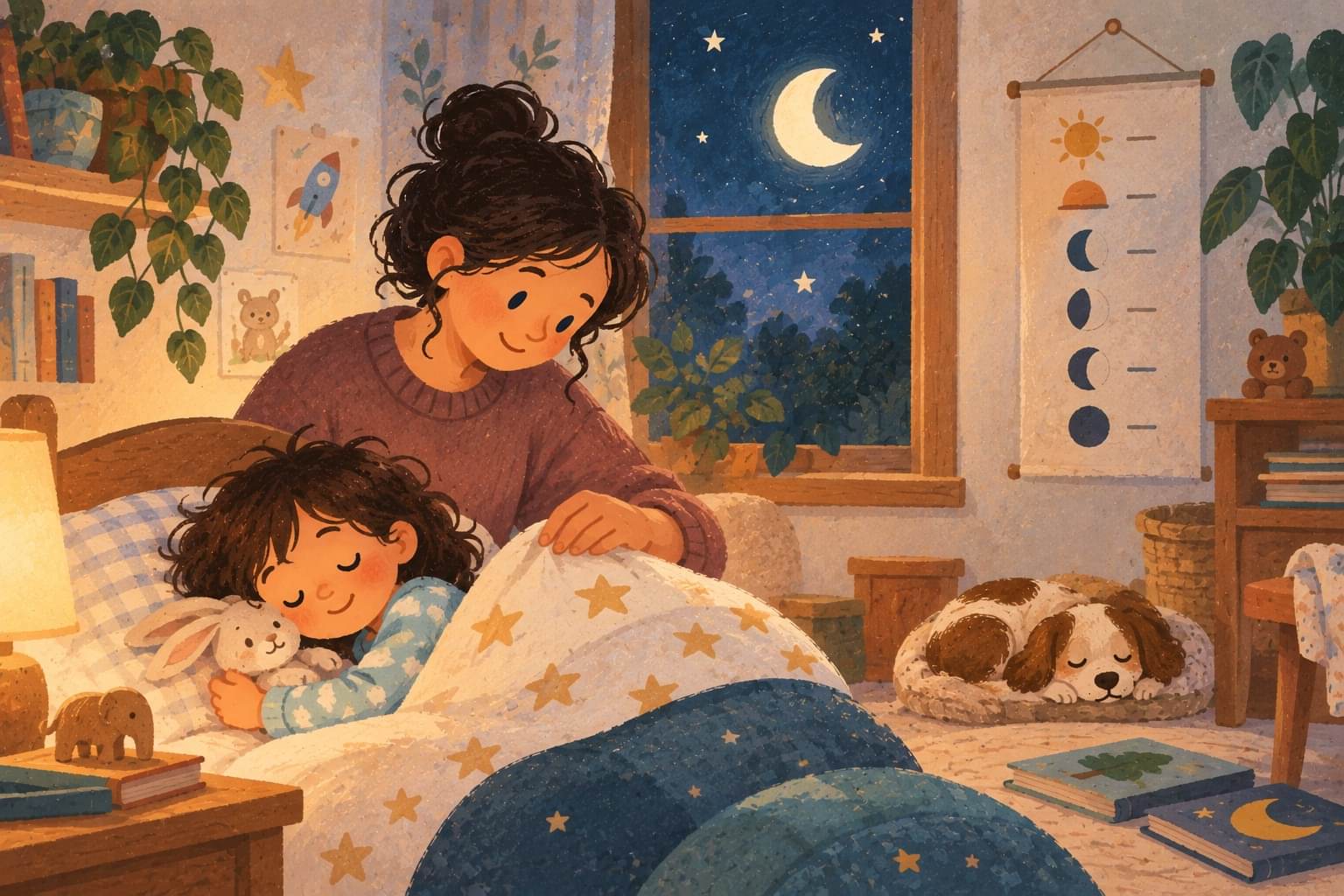
Parents often want a number: how much sleep should a child get? Use age-based recommendations as a starting point, counting sleep across the full 24 hours, including naps. Pair the numbers with what you notice about your child’s nights and how rested they seem during the day.
Sleep recommendations by age
The American Academy of Sleep Medicine's consensus statement recommends the following regular sleep durations. AASM statement
| Age | Hours |
|---|---|
| 4–12 months | 12–16 |
| 1–2 years | 11–14 |
| 3–5 years | 10–13 |
| 6–12 years | 9–12 |
| 13–18 years | 8–10 |
The statement does not give a recommendation for babies younger than four months because of variation in sleep duration and patterns and insufficient evidence for associations with health outcomes. For babies younger than four months, your clinician can help you understand their sleep patterns and safe-sleep needs.
These ranges concern regular sleep duration. Look for patterns across several nights, and bring up persistent difficulties even if the total falls within the range.
An example of counting sleep
Imagine a four-year-old who sleeps from 8 p.m. to 6:30 a.m. and takes a one-hour nap. If those are times actually asleep, the total is eleven and a half hours. Time spent awake before falling asleep or during the night should not be counted as sleep.
Try the same calculation with your child’s usual night and naps, using your best estimate of time asleep.
Try it together · Storyboat
Optional: make a simple sleep note
You need: Paper or a private note. Keep the note somewhere convenient to revisit or share with your child’s clinician.
- Note when your child went to bed, approximately when they fell asleep, and when they woke for the day.
- Add naps and any substantial periods awake overnight that you noticed.
- Record one sentence about the day, such as “Fell asleep in the car” or “Said they felt tired after lunch.”
- Notice patterns over several ordinary days rather than drawing a conclusion from one night.
- Bring the notes to your child's clinician if you have an ongoing concern.
For younger children: Include naps and observations from other caregivers.
For older children: Ask how rested they feel without turning the log into a target they must achieve.
Purpose: Make a conversation about sleep more specific. A few concrete observations can make it easier to explain what your nights are like.
Planning the evening
Use these ranges when planning the time available for sleep. Our simple toddler bedtime routine suggests a repeatable sequence. If it includes a story, The Dream Train is one option for ages 3–7; storytime should fit within the time you have, rather than delay the planned goodnight.
When to ask for help
If early waking, restlessness, or trouble settling keeps happening, gather a few notes about the pattern and discuss them with your child’s clinician.
The AAP advises discussing sleep concerns with a pediatrician, including difficulties falling asleep, night waking, and snoring. Use your notes to explain what you have noticed rather than trying to label the problem from an article. AAP parent guidance
References
- Paruthi, S., et al. (2016). Recommended Amount of Sleep for Pediatric Populations: A Consensus Statement of the American Academy of Sleep Medicine. Journal of Clinical Sleep Medicine, 12(6), 785–786. DOI: 10.5664/jcsm.5866.
- American Academy of Pediatrics. Healthy Sleep Habits: How Many Hours Does Your Child Need?. Parent guidance; accessed September 2026.